The Culture and Location

OM

The symbol “Om” is shown above. It will be explained below.
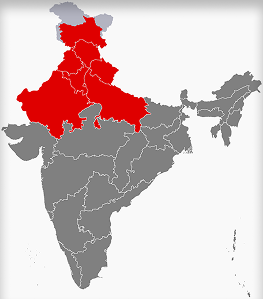
Where is North India on the Map?
North India sits between the Himalayas in the north and the Indo-Gangetic Plain in the south. Major rivers include the Ganges River, Yamuna River, and Indus River. The region includes states such as Uttar Pradesh, Punjab, Haryana, Rajasthan, and Himachal Pradesh. Climate ranges from cold mountain climate in the Himalayas to hot desert climate in the Thar Desert.
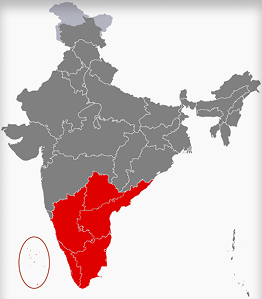
Where is South India on the Map?
South India, also known as “Peninsular India,” is a division of India located in the south of the country. It is significantly different from North India culturally and geographically. The primary states of South India are Andhra Pradesh, Karnataka, Kerala, Tamil Nadu, and Telengana.
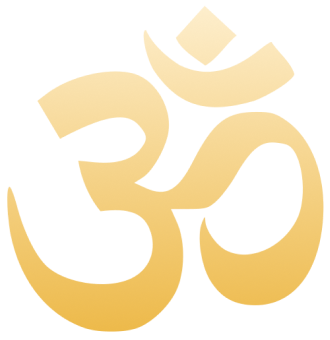
The “Om” symbol
“Om” is the most sacred mantra in Hinduism and represents the “Unstruck sound” which is the first vibration of the universe from which all creation originated. The symbol consists of five different parts, each representing a different state of consciousness or reality.
Facts about North Indian Culture
Clothing
- North Indian clothing specializes in vibrant colors and layered fabrics.
- At traditional events, North Indian clothing features heavy embroidery and tailored styles like Salwar Kameez and Lehengas.
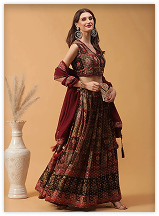
Image of a woman wearing a Lehenga
Music
- North Indian music, also known as “Hindustani” music, heavily focuses on improvisation and emotion.
- Common instruments used in North Indian music are the well known Sitar and Tabla.
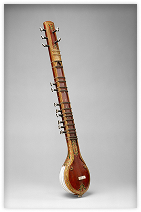
Image of a Sitar
Food
- The cuisine of North India features many rich, wheat-based dishes with thick, mild, dairy-heavy curries.
- Examples of staple North Indian food include Naan and Roti, which are often eaten with paneer or butter chicken curry.
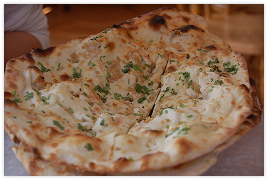
Image of freshly made Naan
Traditions
- North Indian festivals are characterized by loud, multi-day celebrations.
- Major North Indian holidays include Diwali and Holi
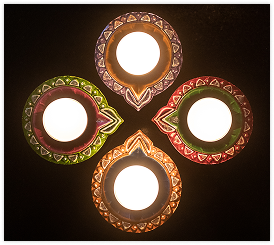
Image of four Diwali Diyas (lamps) placed symmetrically
Facts about South Indian Culture
Clothing
- South Indian clothing specializes in simplicity, prioritizing the warm climate.
- At home, or during traditional events, Sarees and Dhotis are often worn in unique regional styles.
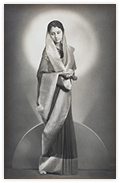
Image of a woman wearing a Saree
Music
- South Indian music, also known as Carnatic music, is more structured, and it includes more complex and rhythmic melodies.
- Common instruments used in South Indian music are the Mridangam and Violin.
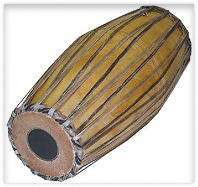
Image of a Mridangam
Food
- South Indian cuisine is mostly rice-based with spicier curries.
- It features heavily fermented dishes, such as Dosa, Idli, and Sambar.
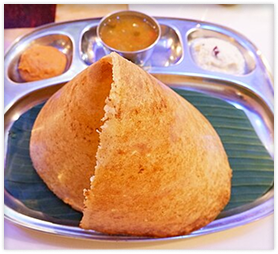
Image of Dosa served with Sambar and Chutney
Traditions
- South Indian festivals are heavily characterized by shorter, ritual-based gatherings.
- Most gatherings occur at the religious temples located there. Examples of festivals include Pongal and Ugadi.
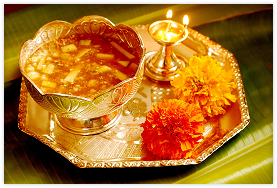
Image of Ugadi Pachadi with puja tray
The Full Indian Calendar
Look through the Calendar to view the vast amount of Indian Traditions/Holidays! (Note – months that are skipped do not have important dates).